
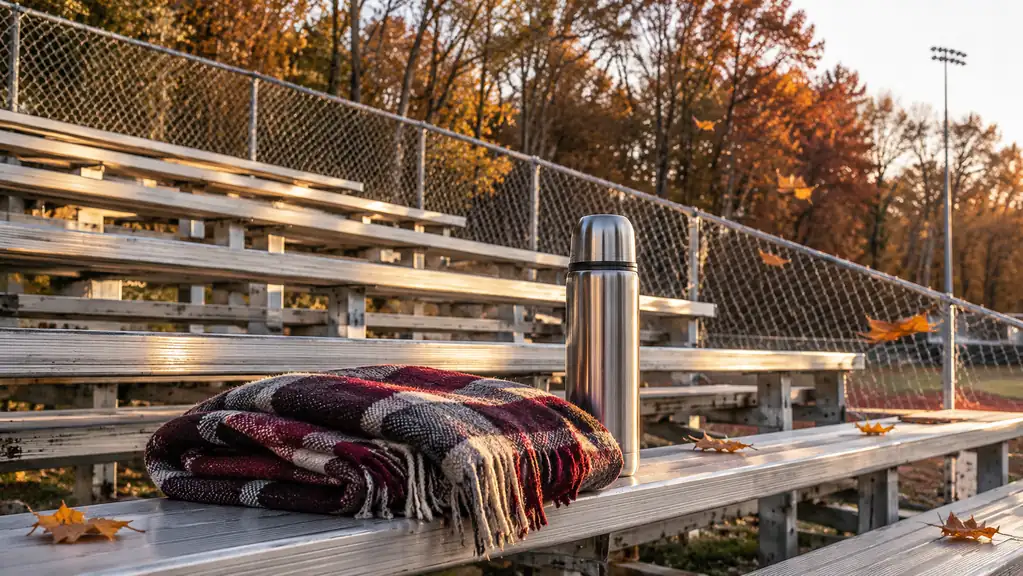
There is a particular cold that only exists in a high school stadium in late October. The wind comes across the parking lot, the concrete pulls heat out of the soles of your shoes, and the blanket you brought along turns out to be a decorative object. I sat through more of those nights than I can count, first as an assistant coach on the sideline and now as a spectator with a season ticket and a bad knee that tells me when the temperature drops below forty.
Last fall I replaced the thin throw in my truck with the DOWN UNDER OUTDOORS Waterproof 350 GSM Fleece Stadium Blanket. I have now used it through a full football season and into a pair of cold spring baseball nights on the bleachers, and I have opinions. Some of them are the ones you read in every review. A few of them are the things nobody mentions until you have owned one for a few months and washed it twice.
So here is the honest version, in the order I actually noticed things.
The Quick Verdict
Warm, genuinely dry, and big enough for a grown man to sit under without a tug of war with his neighbor. The bulk in the sack and the drying time are the honest costs.
Amazon Check Today's Price →The blanket that was still dry on the inside after three hours of October drizzle
350 GSM fleece, ultrasonically quilted so the layers stay put, and a toggle and loop that let you wear it like a cape with both hands free.
Amazon Check Today's Price on Amazon →How I've Used It
I picked this up before the second home game last season and it has lived in the truck ever since. It has been through eight home Fridays and a couple of Sunday afternoons, plus two April baseball evenings when the temperature fell faster than the game moved. The worst of those was a night that started at forty-four degrees with a steady drizzle and a wind that never quit. I sit in the upper section, which is the worst place to be in weather, and I stayed to the final out.
My routine with it has not changed. I fold it double on the bench, sit on that, and bring the rest up over my shoulders. When it starts raining I put the hood of my jacket up and let the blanket take the weather. When my hands are full I use the cape setup. That is the whole system, and it has held up across two seasons of Kansas weather, which around here means forty and raining in the same week as seventy and sunny.
The first cold game of that stretch was a Friday in early October, forty-one degrees at kickoff with a wind coming out of the northwest. I had the old wool throw in the truck that night too, the one I had dragged to games for years, and by the second quarter it was heavy with mist and doing nothing for me. I put the DOWN UNDER OUTDOORS blanket over my legs instead and left the wool in a heap on the bench beside me. That side by side comparison is the reason I never went back to the wool. It was not close.
The first thing I did when I got it home was unfold it on the kitchen table and check the quilting, because I have had blankets come apart at the seams after two washes and leave me with batting bunched in one corner. Two seasons in, mine has not done that. That is the single most useful thing I can tell you about it, and it is the thing almost no review bothers to check.
What 350 GSM Fleece Actually Means When You're Sitting Still
350 GSM means the fleece weighs 350 grams per square meter. You do not need to remember the number. What it means in practice is that this is a real blanket and not a promotional throw handed out at a charity golf outing. The shell is polyester, the fill is fleece, and the whole thing weighs about 3.1 pounds. For a grown man sitting still in the forties, that is enough to keep your legs from going numb without turning the seat into a sauna.
Sitting still is the part people underestimate. Walking around in cold weather generates heat. Perching on aluminum for three hours does not, and the cold comes up through the bench as much as it comes at you sideways. The X-Large size is the reason the fold in half approach works at all. I get a padded seat and enough left over to cover my shoulders. With a smaller blanket I would be choosing between my legs and my back, and I would be choosing wrong.
The other detail worth knowing is that the two layers are ultrasonically quilted, which is a heat process rather than a stitched seam. That means the layers cannot slide against each other. On a blanket that is not bonded, you end up with a lump at one end and a thin spot at the other by the second quarter, and you spend the rest of the game chasing the fill around. This one holds its shape, which sounds like a small thing until you have spent a November evening fighting a blanket that will not stay where you put it.
I ran a crude test on that the first week, because I did not believe the quilting would hold. I held one corner and let the rest of it hang, then pinched the middle and tried to work the two layers apart with my thumbs. On the old throw they slid almost immediately and I could feel the fill roll into a ridge. On this one the quilt lines stopped them cold and the whole thing moved as a single piece. It is a five minute test you can run yourself on any blanket before you trust it in a cold stadium, and I wish I had known to run it years ago.
The Cape Toggle Is the Part I Thought Was a Gimmick
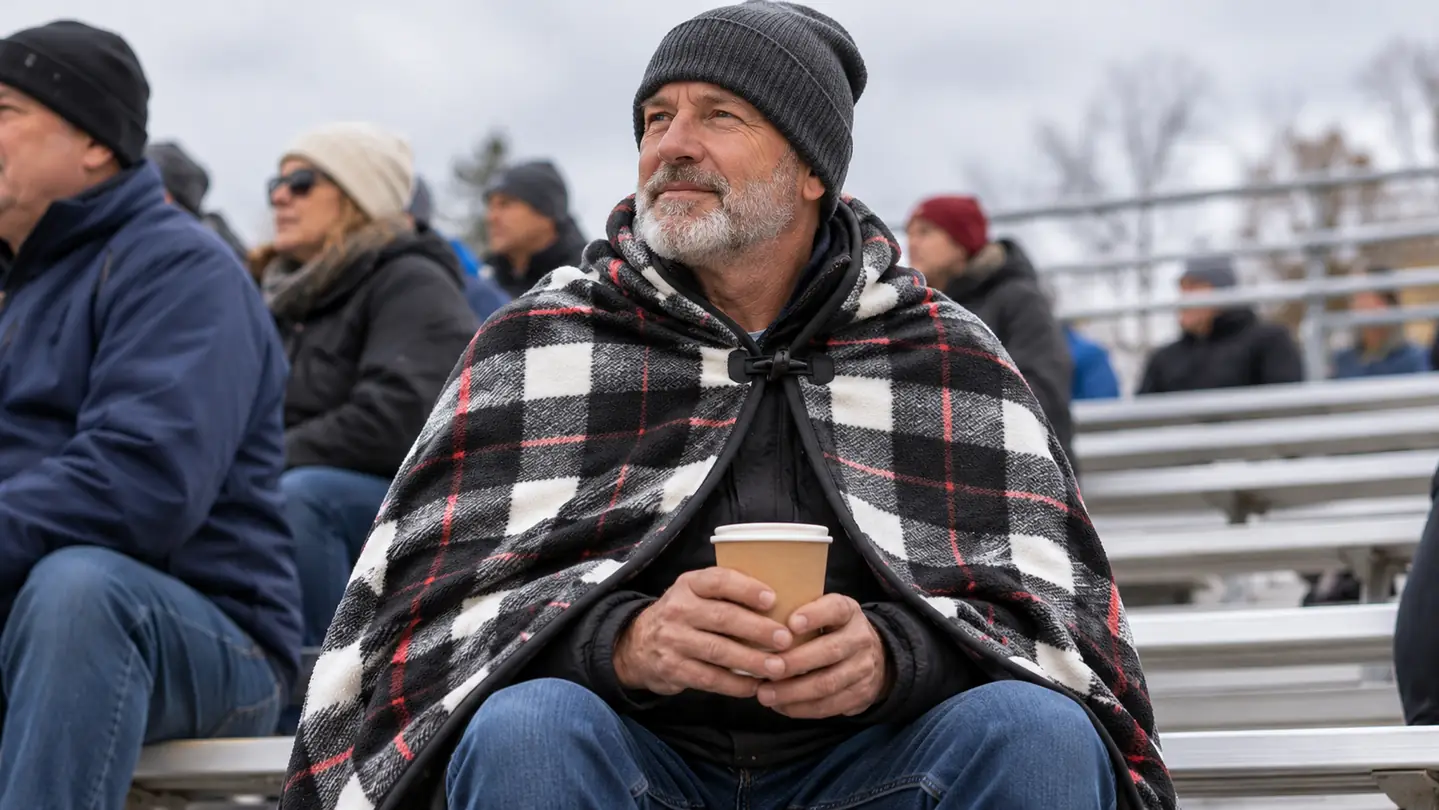
One of the upgrades on this blanket is a toggle and loop that let you wear it like a cape. I figured that was for people who film themselves at tailgates. Then I tried it on a cold Friday in November when I needed both hands for a coffee and a program, and I have used it that way ever since.
The cape setup works because the blanket closes at the neck and hangs from your shoulders instead of sliding off every time you reach for something. Your arms come out when you need them and go back in when you do not. It is the difference between a blanket you fight all evening and one you forget you are wearing.
It is not a coat, though, and I want to be straight about that. In a real crosswind the open front catches air and you will feel it. I deal with that by sitting sideways to the wind, which is a lesson you learn after enough cold Fridays on a sideline. If the forecast calls for sustained wind over twenty, I wear a proper jacket underneath and treat the blanket as the outer layer. That combination has kept me comfortable in weather where I would otherwise have headed for the car at halftime.
I have also worn it caped on the walk in from the parking lot, which is fine right up until you reach the gate. The trailing edge drags on whatever the ground has on it after a rain, and there is no good way to gather it up while you are carrying a stadium seat in the other hand. I wear it to the top of the ramp and then fold it over my arm. Two seasons of doing it that way and the hem still looks fine.
What Nobody Tells You About a Waterproof Blanket
Here is the part reviews tend to skip. A waterproof shell does not breathe the way wool does. That is the trade you are making, and it is a good trade in rain and a mildly annoying one in dry cold. If you climb under this wearing a damp jacket, the moisture has nowhere to go and you will feel clammy after an hour. Take the wet layer off first, or accept that you will be a little sticky by the fourth quarter.
I learned that one at a Sunday game last November. I had been out in the drizzle setting up a tailgate for an hour before kickoff and my jacket was damp across the shoulders. I got to my seat, pulled the blanket over the top of it, and by halftime my shirt felt cold and stuck to me. Same blanket, same temperature, same wind as the night it worked perfectly. The only variable was the wet layer I had left on. Now I take the jacket off, wring it out, and put it back on dry or not at all.
The flip side is that in actual rain this thing earns its keep. I have sat through a steady drizzle that soaked the wool blanket I used to keep in the truck, and the inside of this one was dry when I stood up. The waterproof pocket is where my phone and keys go now, and I have not had a wet phone since I started using it. That pocket is a small feature that turns out to be the one I would miss most if it disappeared.
One more thing nobody mentions: a waterproof surface is a little slippery on wet aluminum. Folded double under you, it is not a problem. Draped as a single layer over a damp bench, it will slide when you lean back. I learned that the hard way in the second quarter of a cold game and spent the rest of the half repositioning. Fold it, do not drape it.
And a note on the numbers, for what they are worth. The listing shows 4.7 stars across close to four thousand reviews. I read a stack of them before I ordered and the complaints clustered around two things, the packed size and the drying time. Both are real. Neither turned out to be a deal breaker for me, but you should know they are not made up.
What Two Seasons of Washing Did to It
Laundering is straightforward and slow. It goes in the machine, which is more than I can say for the wool blanket it replaced. But polyester fleece holds water, so it comes out heavy and it takes most of a day on the porch rail to dry. Do not plan on washing it the morning of a game. Wash it in the off week and hang it somewhere with air moving through it. I have never put mine in the dryer, because the care instructions stop at machine wash and I am not willing to find out the expensive way.
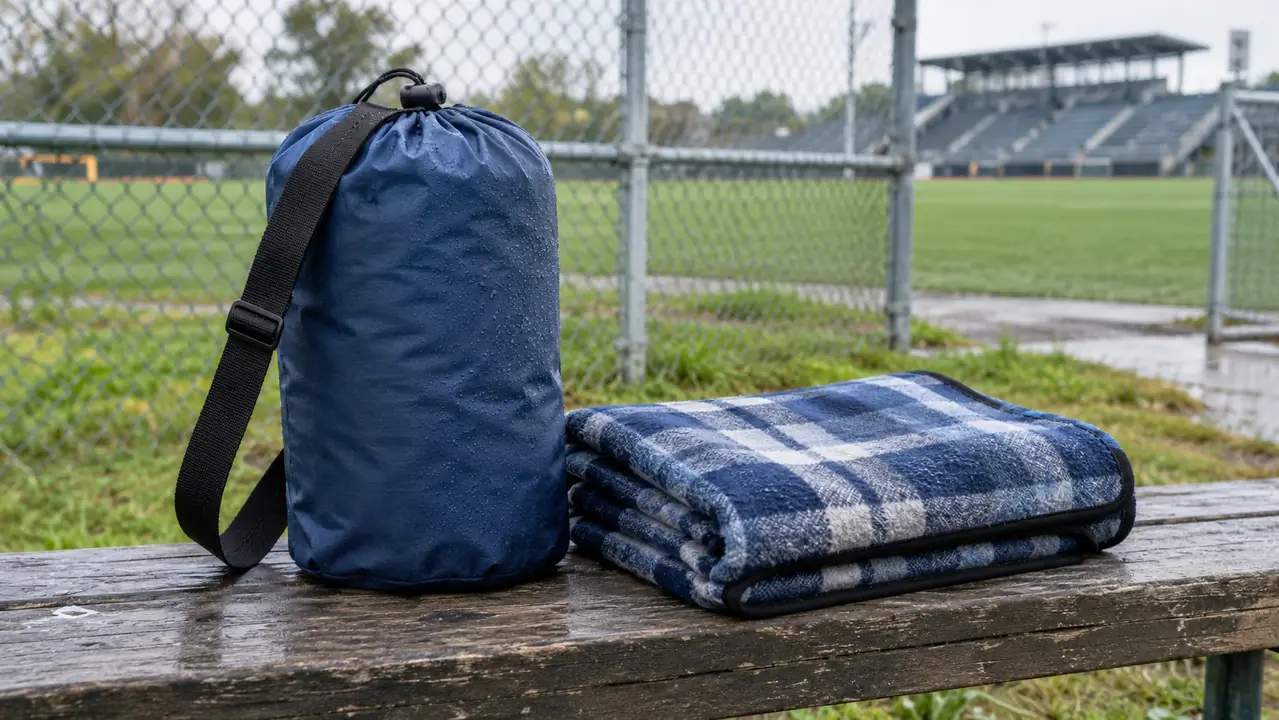
After two cycles the fleece has not pilled badly and the quilting has not shifted. The waterproof pocket still does its job and the toggle and loop still hold at the neck. The stuff sack has taken the worst of the wear, since it rides in the truck bed and gets dragged in and out every week, and it is scuffed but intact. I have gear that cost more and has aged worse.
Where It Fell Short for Me
The stuff sack is the honest cost of the size. When the blanket is packed, the sack is roughly the size of a small duffel, and it does not compress the way a sleeping bag does. If all you are carrying is the blanket, fine. If you are also hauling a stadium seat and a bag of snacks, you will notice it. The sack has a carry handle and a shoulder strap, and the strap is the part that saves you when your other hand is full.
The 3.1 pounds is real on the walk in from the parking lot, which at our stadium is about a quarter mile. That is not exactly a complaint. It is roughly the weight of a decent thermos and a rain jacket combined. But this is not a throw you tuck under one arm, and if you are the person who carries everything for the family, you will feel the difference by the time you reach the gate.
I timed that walk once, out of curiosity. Six minutes at my pace, with the sack on my shoulder and a stadium seat in my free hand, and I was ready to set the whole load aside by the time I reached the top of the ramp. That is not a reason to leave the DOWN UNDER OUTDOORS blanket in the truck. It is a reason to use the shoulder strap instead of the carry handle, which took me two games to figure out and would have saved my fingers a fair amount of grief.
And the pattern is loud. The checkered design is not subtle and it is not trying to be. I do not care, because I am sitting in a stadium and not at a dinner party. If you want something that looks understated in a photograph, this is not that blanket.
What I Liked
- Kept me dry through a steady three hour drizzle
- 350 GSM fleece is warm enough for a grown man sitting still in the forties
- Ultrasonic quilting keeps the two layers from sliding into a cold lump
- Toggle and loop let you wear it like a cape with both hands free
- Waterproof pocket keeps a phone and keys dry
- Machine washable, unlike the wool blanket it replaced
Where It Falls Short
- 3.1 pounds, and the packed sack takes up real room in the truck
- Does not breathe, so a damp jacket underneath turns clammy
- Slides on wet aluminum unless you fold it double
- Takes most of a day to air dry after a wash
- The checkered pattern is not subtle
Three hours in a steady drizzle, and the wool throw in the truck was soaked through while the inside of this one was still dry.
Who This Is For
If you are the person who sits in the same seat every home game and stays to the final whistle, this blanket is built for you. It is for the parent on the sideline at a Friday night game who is not moving enough to stay warm. It is for the grandparent in the aluminum bleachers at a cold April baseball game. It is also for the tailgate, where it works as a seat cover and a wrap in the same afternoon.
I would put it in the same category as a good rain jacket. Not exciting, not something you talk about at a party, but the piece of gear you are glad you brought. The people I have handed it to at games have all asked where it came from before the end of the first half, which is about as good a recommendation as gear gets.
Who Should Skip It
If you want a light throw to keep behind the seat for a cool evening, this is more blanket than you need. At 3.1 pounds packed into a decent sized sack, it is a commitment in the trunk, and a cheap fleece throw will do that job for a fraction of the weight. Buy this because you sit outside in bad weather for hours, not because you might get chilly on a patio.
If you mostly need something to keep the bench dry and you run warm, a simple waterproof seat pad is lighter and easier to live with. And if the look of a checkered stadium blanket bothers you, that feeling is not going to fade. That is a legitimate reason to pick something plainer, and I would rather tell you now than have you find out in the parking lot.
The one piece of gear I would replace before the next cold home game
Waterproof shell, 350 GSM fleece, quilting that stays put, and a cape toggle for when your hands are full. It has been in my truck for two seasons for a reason.
Amazon Check Today's Price on Amazon →