
For nineteen years I taught history in the same high school classroom, and for most of those years I kept four signed baseballs lined up on the windowsill behind my desk. That was a mistake. A west-facing window in Kansas gets sun from about one o'clock until it goes down, and by the time I hung up my grade book, the ink on two of those balls had gone the color of weak tea. You could still see there was a signature. You just could not tell whose.
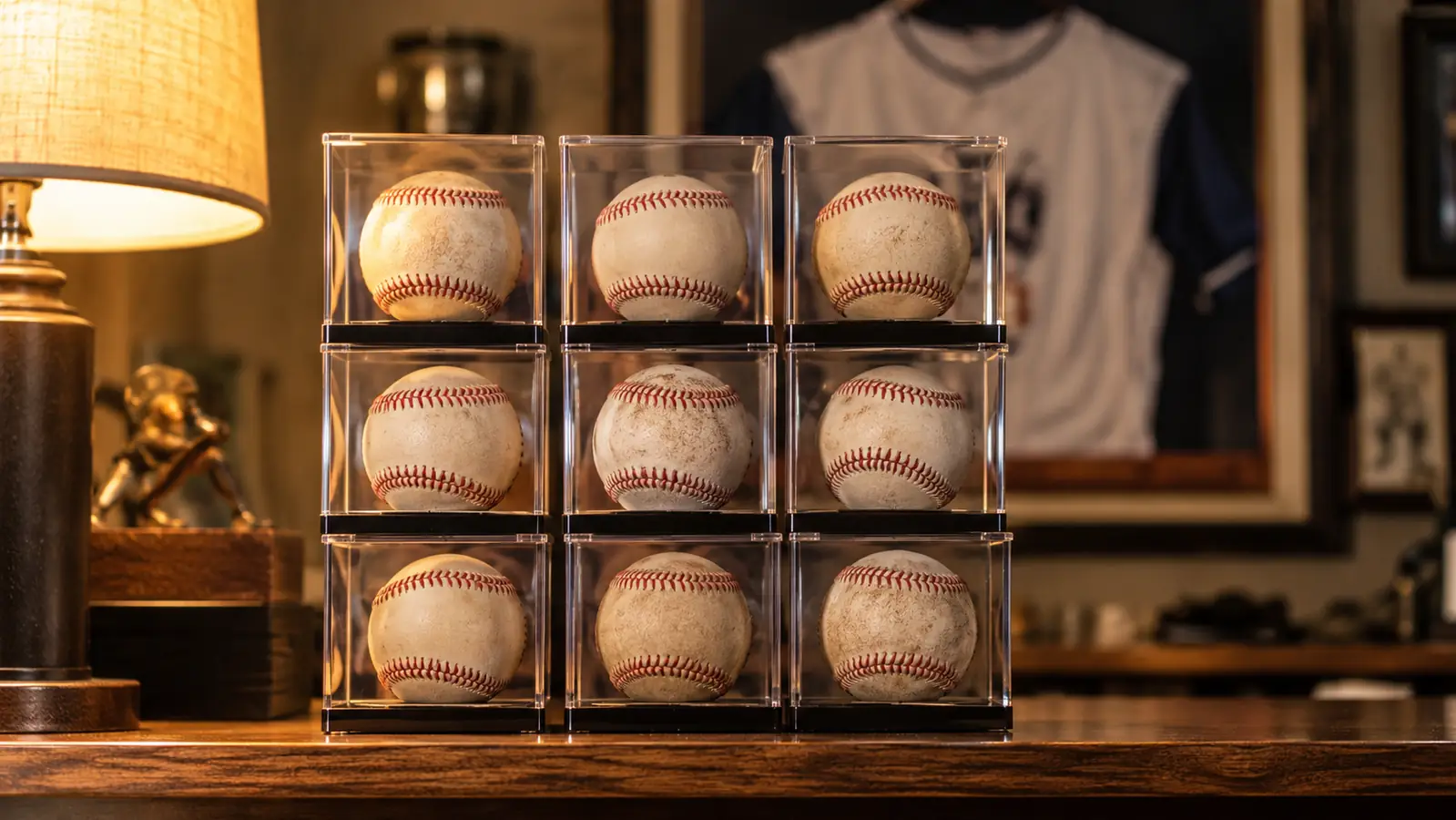
I tell you that so you understand why the shelf in my basement den looks the way it does now. Nine baseballs, each one sitting in an Ultra Pro square holder, stacked two deep and three high, labeled on the bottom with a strip of masking tape. It is not a fancy display. It is a working shelf in a room where I watch football on Sundays and where Joan and I listen to the home team on the radio in July. But nothing on that shelf has faded in four years, and that is the whole point of this piece.
Before I got there, I tried the cheap route twice. First was an open wire stand, the kind that holds a ball up like a trophy. It looked fine for about a month. Then I noticed dust working into the seams, and the ball closest to the lamp had a pale stripe across the sweet spot where the light hit it every evening. Second was a shoebox with the lid propped open, which is not a display. That is storage with delusions.
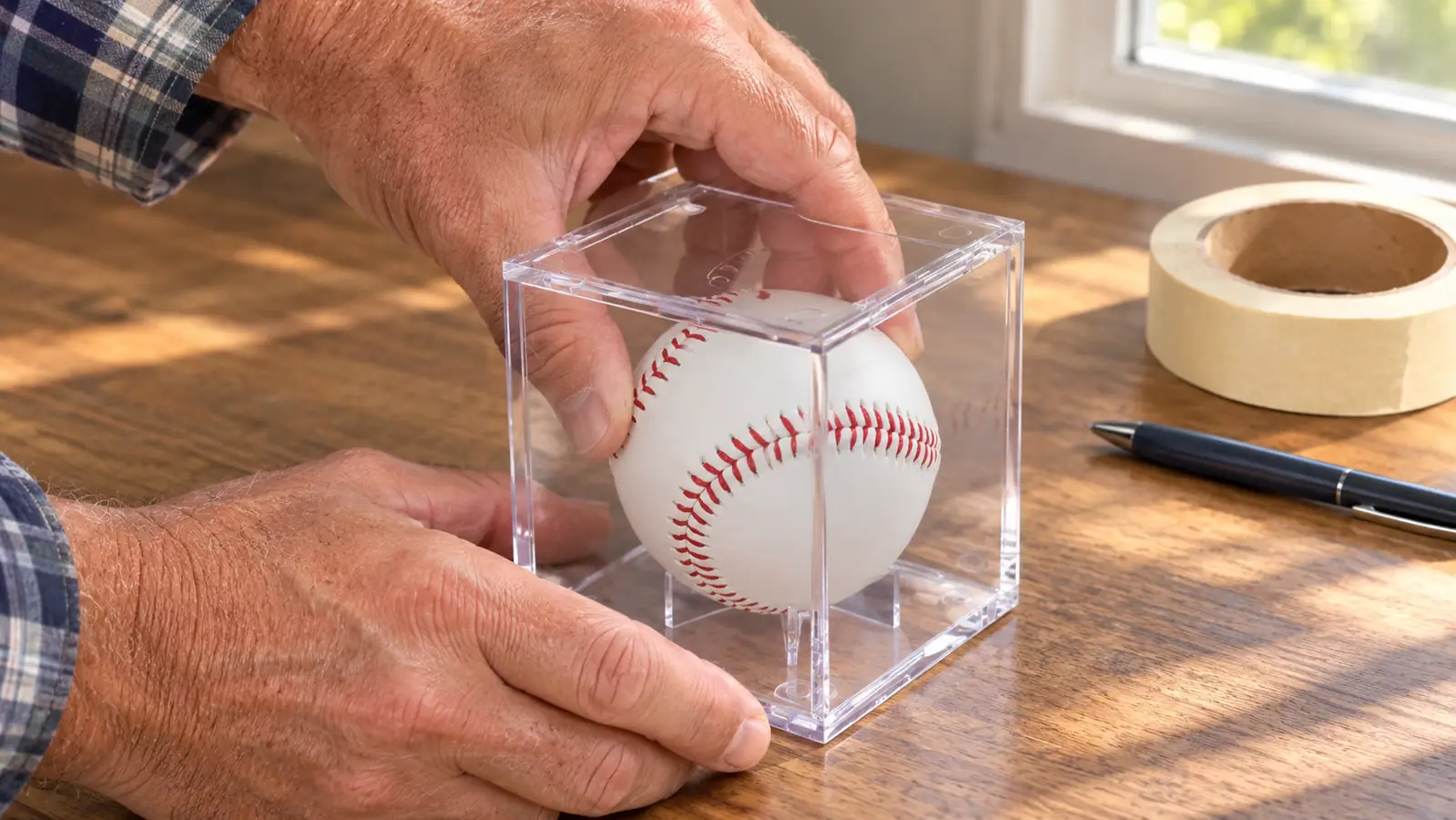
The fix was the Ultra Pro Baseball Clear Square UV Holder. I bought two to start, mostly because buying a plastic box did not feel like a real decision, and then I went back for seven more. What sold me was the cradle. There is a built-in ring inside the box that the ball sits in, so it does not roll, does not rest on the seams, and does not slide forward when you pick the whole thing up. I have knocked one off a shelf and the ball stayed put.
The other half of it is the UV barrier in the plastic. I am not a chemist and I am not going to pretend I understand exactly what goes into that, but I understand the result. The window in my den faces east, which is gentler than the classroom windowsill ever was, and the balls that went into these Ultra Pro boxes four summers ago still read as sharp as the day I put them in. They are archival safe, they are stackable, and the frame on each one measures right about three and a quarter inches across, small enough that nine of them sit on one shelf without looking like a warehouse.
I keep them labeled because memory is a liar. Masking tape on the bottom, initials and a year, nothing fancy. When my son Kyle visits he pulls them out one at a time and asks questions, and I have gotten at least three of those answers wrong. The tape has corrected me every time.
Nine balls, one shelf, four Kansas summers, and the ink still reads like the day each one came home.
The signature you save is the one you box today
Ultra Pro holders cradle the ball, stack on a shelf, and block the light that eats ink. I bought two and went back for seven.
Amazon Check Today's Price on Amazon →Here is the part nobody tells you about collecting. The damage is not dramatic. Nobody drops a signed ball in a puddle. What happens is that the ball sits in ordinary room light for a decade, and then one afternoon you hold it up next to one you just got and realize the old one looks tired. Light does that. It does it slowly, and it does it for free.
So I box everything now, even the ones that are not worth much. A ball with a coach's signature from a summer camp I worked in 1988 sits in the same kind of Ultra Pro holder as the better ones, because the point was never resale value. The point is that in thirty years Kyle can pick one up, read a name, and remember who I was talking about at the dinner table. I have watched a signature turn to tea stains once already. I am not doing it twice.
A word on how they look, since Joan has opinions and she is usually right. The Ultra Pro boxes are plain and square and they do not call attention to themselves, which suits a basement. I stack them two high and they stay put on a tabletop shelf. When company comes down to watch a game, somebody always picks one up and turns it over. That is the most action those baseballs have seen in years.
One honest note. If you have a ball you plan to handle every week, take it out and toss it around, this is not the thing for that. A box is for the ball that goes on the shelf and stays there. I keep one unsigned practice ball on the desk for fidgeting, and the signed ones stay boxed. That is the deal I made with myself and it has held for four years running.
There is a practical thing I did not expect. The boxes keep the dust off. My den has a furnace register in the floor and it moves a fair amount of air, and before the boxes I was wiping down baseballs with a microfiber cloth every other month. Now I dust the outsides of nine boxes in about a minute and I am finished.
What I'd Tell You If We Were Sitting at My Kitchen Table
I would tell you to stop waiting for a better shelf. I spent a decade telling myself I would build something in the wood shop, and during that decade two baseballs faded on a windowsill behind a radiator. The Ultra Pro holders did exactly what I bought them to do and nothing I did not ask for, and nine of them took one afternoon to arrange. If you have a shelf of signed baseballs, the question is not whether you can find room for a few boxes. It is how many more summers you want to leave those balls sitting in the light. Joan has been after me to hang the framed jersey next, and I suspect she is right about that too.
Box the shelf this weekend, not next summer
Square, stackable, archival safe, and built with a cradle that holds the ball where you left it. The ball you can still read in ten years is the one you put away today.
Amazon Check Today's Price on Amazon →